
51,548
saplings/plants recorded
Documented total in the post-event report
A district-wide NameTree programme that brought together students, teachers, volunteers, schools, colleges, villages, and a Shobha Yatra to plant and share the message of long-term tree care.
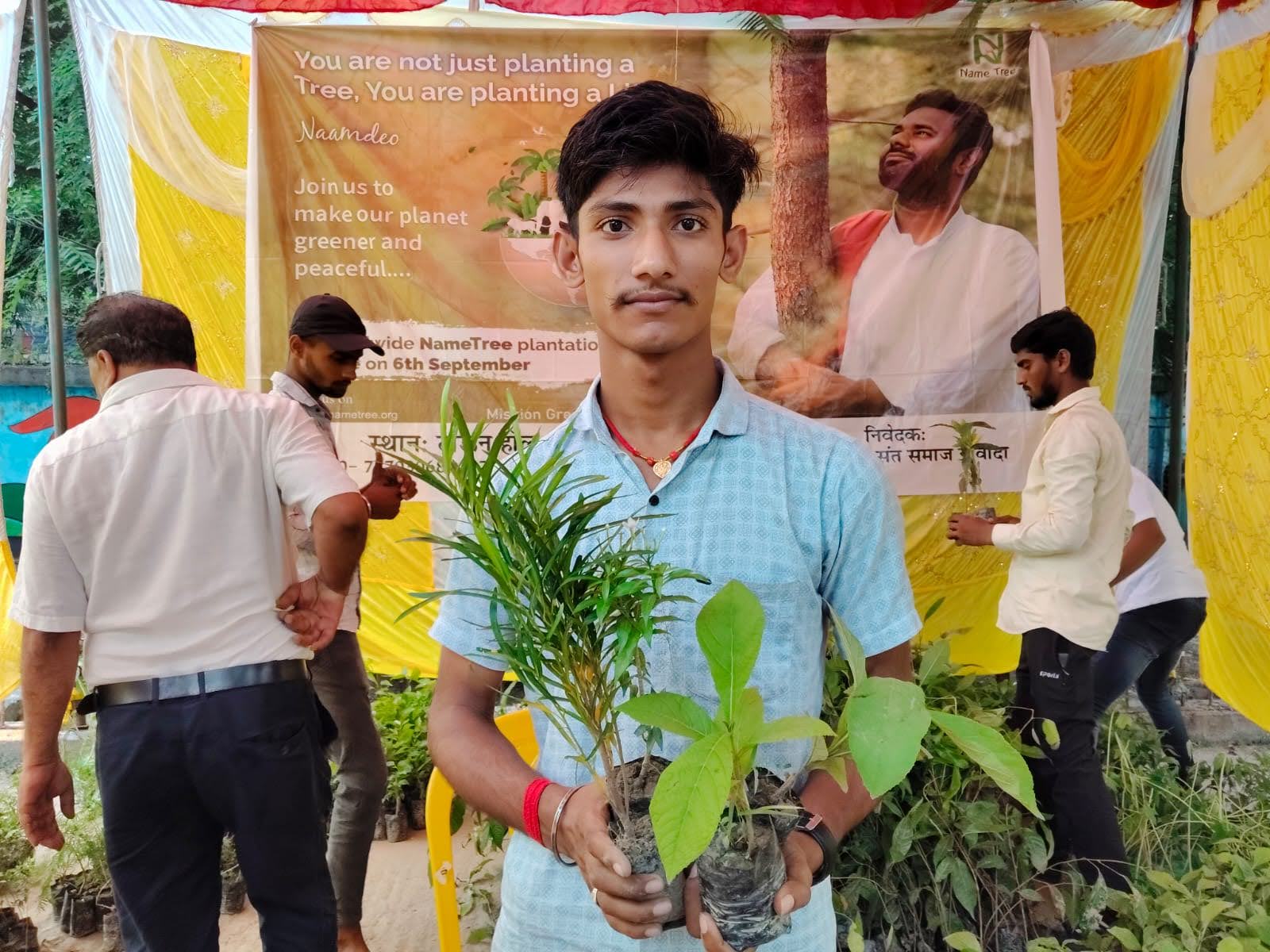
A young participant holds saplings ready for distribution during the NameTree plantation programme.
Documented total in the post-event report
Including school, college, village, and community locations
Across 6 blocks of Nawada district
Educational institutions hosted plantation activity
Schools helped take the green message into public view
Follow-up field verification was conducted in May 2026
On 6 September 2025, NameTree’s Nawada programme connected plantation activity with education, public awareness, and community participation. The report records 51,548 saplings/plants across schools, colleges, villages, and community sites.
Students, teachers, volunteers, and citizens participated directly. The drive was designed to make tree planting feel personal: not only placing a sapling in the soil, but also remembering it, protecting it, and treating it as a living responsibility.
A Shobha Yatra helped take the environmental message beyond individual plantation sites. It made the idea visible in the community and encouraged people to see tree care as a shared responsibility.
From Nawada and Nardiganj to Hisuwa, Pakari Barawan, Roh and Akbarpur, communities across the district took part. Here is the complete village-by-village record from the programme.
Ataoua, Gonawan, Asarhi, Oraina, Pakariya, Odhanpur, Pachhiyandih
Sahajpura, Sarsu, Pesh, Kauhara, Rame, Sadipur, Domawar, Padpa
Rajavigaha, Katdhara, Vajanda, Matukavigaha, Udsa, Chatihar, Naudih, Bhimavigaha, Gajanda, Pachanda
Kesari, Hudhrahi, Meghipur, Poksi, Dharani Vigaha, Waliyari, Badkimandhar, Dhewadha, Dola, Budhan Vigaha, Wajipur
Venipur, Samaraiha, Gaivali, Samarigadh, Dhanawan, Ohari, Kunj, Barail, Siur
Sheikhpura, Gopalpura
Counts below are taken from the Nawada post-event report. They help show the variety of long-term trees, fruit plants, decorative plants, and household-use plants included in the drive.
Long-term green cover, biodiversity, and timber value
Strong canopy cover and long-term plantation value
Fast-fruiting, community nutrition, and household food security
Fruit, shade, cultural connection, and emotional memory
Fast-growing native tree, ecological support, and green cover
Beautification, public awareness, and event aesthetics
Nutritious fruit, community health, and kitchen garden value
Household use, livelihood support, and kitchen value
Native forest species, ecological and cultural significance
Food, timber, and shade for rural communities
High-value fruit, nutrition, and livelihood opportunity
Medicinal fruit, nutritional value, and rural health support
Nutritious seasonal fruit and biodiversity support
Awareness, beautification, and environmental aesthetics
Medicinal and nutritional value, traditional significance
Ornamental, shade, and devotional tree
Long-term livelihood, nutrition, and coastal adaptation
Medicinal fruit, biodiversity support, and traditional value
Fast food production, household nutrition
Medicinal, insecticidal, and traditional significance
Devotional, medicinal, and ecological value
Nutritional, medicinal, livelihood, and fast-growing plantation value
Wide shade canopy, biodiversity support, soil conservation, and cultural significance
Shade, biodiversity support, air-quality improvement, and sacred cultural significance
Students and teachers made environmental care something people could touch, understand, and remember.
The Shobha Yatra helped turn plantation into a public conversation about responsibility.
The May 2026 survival check gives the programme more credibility than a one-day planting count alone.